Quantower Trading Platform: Review for Futures & Prop Firms
Choosing the right trading software is just as important as finding a reliable proprietary trading firm. While MetaTrader dominates forex, serious futures traders and modern prop firms are increasingly adopting the Quantower trading platform.
Known for its advanced modular interface, lightning-fast execution, and institutional-grade tools, Quantower has become a favorite for day traders.
Is this platform worth using for your next evaluation challenge? Let us examine its core features, execution speeds, and overall utility for funded traders.
What Makes Quantower Stand Out?
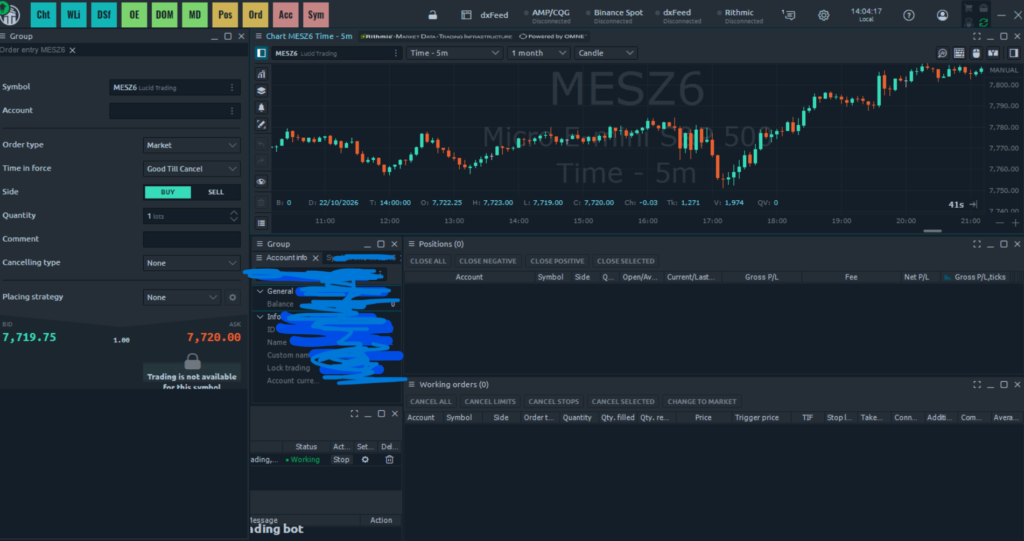
The Quantower trading platform is built as a multi-asset, modular terminal designed to give retail traders professional tools without cluttering their workspace.
Unlike traditional platforms that force you into rigid layouts, Quantower lets you detach charts, DOM (Depth of Market) panels, and order entry windows seamlessly across multiple monitors.
For traders utilizing Smart Money Concepts (SMC) or volume-based strategies, the flexibility of the workspace is a massive operational upgrade.
Key Features for Futures and Prop Firm Traders
Trading futures indices like S&P 500 (ES/MES) or Nasdaq (NQ/MNQ) inside a prop firm requires precise tools. Quantower excels in several key areas:
Advanced DOM (Depth of Market): The integrated ladder allows scalpers and institutional traders to execute orders, place stop losses, and read order flow with zero latency.
Volume Profile and Footprint Charts: Essential for tracking liquidity sweeps and institutional footprints directly on intraday timeframes.
Multi-Broker Connectivity: Quantower integrates smoothly with top futures brokers and prop firm backend gateways, ensuring stable connection during high-impact news.
Built-in Multi-Account Copy Trading (CopyBot)
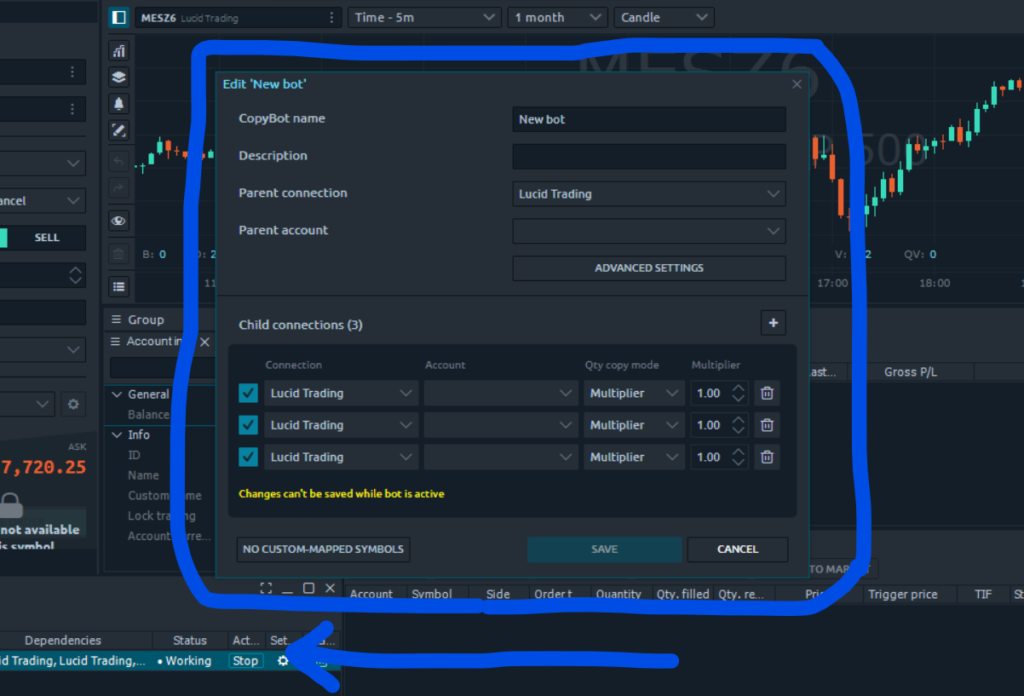
For traders managing multiple evaluation or funded accounts across futures prop firms, Quantower provides an invaluable built-in feature: the CopyBot.
Unlike other platforms that require third-party paid copiers or complex API configurations, Quantower includes a native trade copier completely free of charge.
You can set a lead account (Parent Connection) and automatically mirror all executions, stop losses, and take profits to multiple sub-accounts (Child Connections) with customizable lot multipliers in real-time.
Execution Speed and Risk Management on Quantower
When managing strict daily drawdown limits in a prop evaluation, execution speed can make or break your account.
Quantower routes orders directly to the exchange or broker gateway with extreme efficiency. Furthermore, built-in risk management features allow traders to set hard bracket orders (OCO – Order Cancels Order) instantly upon entry.
In my personal day trading routine, being able to drag Stop Loss and Take Profit levels directly on the chart or DOM prevents costly manual input errors during volatile market opens.
Quantower vs Traditional Platforms
Many traders coming from MT5 or older terminals wonder how Quantower compares for daily use.
While MetaTrader is exceptional for automated Expert Advisors (EAs) in forex, Quantower is purpose-built for manual price action, order flow, and futures trading.
Its modern interface feels much smoother, and the lack of legacy software bugs makes long trading sessions far less fatiguing on the eyes and mind.
Final Verdict: Should You Use Quantower?
The Quantower trading platform is a powerhouse for index futures traders and anyone operating within modern proprietary trading firms.
If your strategy relies on clean DOM execution, volume analysis, built-in copy trading, and multi-monitor setups, transitioning to Quantower can significantly elevate your trading efficiency and execution precision.
